Now Viewing: International Website
Now Viewing: International Website


For decades, PCI has measured success by restoring blood flow. The DynamX® Coronary Bioadaptor System is designed to go beyond acute procedural success. Unlike drug-eluting stents that permanently cage the artery, limiting its function and contributing to an annual 2-3% increase in adverse clinical events over time,1-4 DynamX unlocks after six months, providing functional restoration of the artery evidenced by return of vessel pulsatility and adaptive remodeling.
Ready to restore hemodynamic modulation?
Unlike conventional drug-eluting stents, the DynamX coronary bioadaptor is designed to transform after implantation. Watch how its unique unlocking mechanism works.
The results of bioadaptive angioplasty extend beyond the procedure itself. Randomized controlled trials (RCTs) and real-world clinical studies demonstrate improvements in vessel physiology, hemodynamic performance, and durable clinical outcomes.
decrease in target lesion failure at 4 years compared to DES (p=0.020)5
increase in blood flow with every heartbeat, as pulsatility returns6
plaque volume regression in lipid rich lesions vs. +10% increase for DES (p=0.008)6

Click icon to see more details
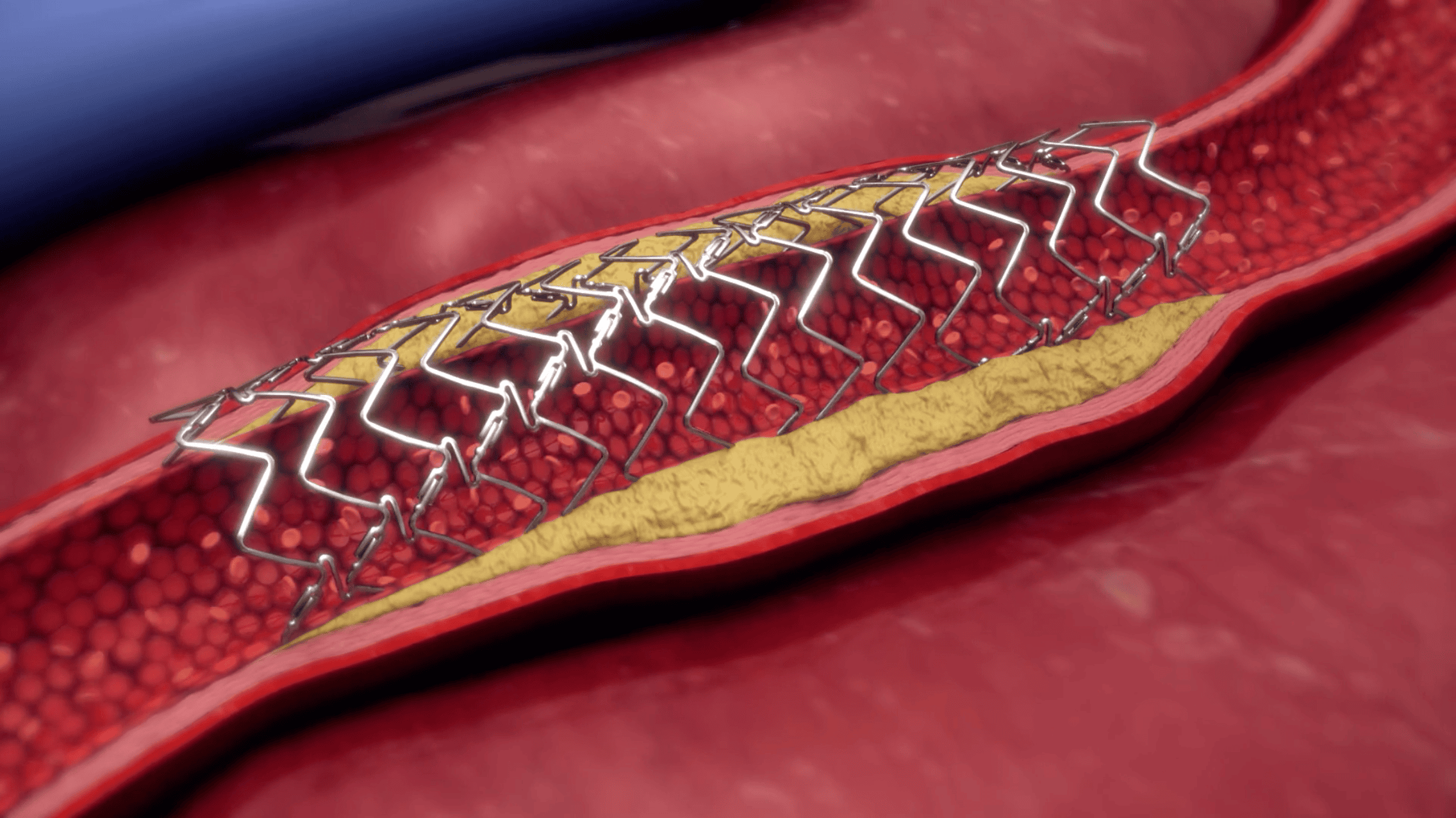
Three thin interlocked cobalt chromium helical strands, bonded by a bioresorbable polymer, provide radial strength to achieve optimal acute gain and restore blood flow during the healing phase
DynamX unlocks after completion of drug delivery and natural resorption of the polymer after 6 months, releasing the artery while maintaining the established lumen flow
Following the unlocking phase, DynamX continues to provide dynamic vessel support while restoring hemodynamic modulation, pulsatility, vasomotion, and adaptive remodeling, helping the artery function more naturally over time.
We’ve reimagined coronary intervention for long-term vessel function.
Time: ~4 minutes
Dr. Antonio Mangieri demonstrates how DynamX achieves favorable vessel remodeling including late lumen enlargement and lumen area preservation over time in a complex lesion. He also confirmed restored vasomotion response, which is critical for blood flow regulation, by OCT.
Time: ~1 minute
Dr. Ganapathi Palaniappan presents two challenging cases demonstrating that bioadaptive angioplasty in highly complex anatomies including CTO and heavy calcification is fully achievable with proper vessel preparation, yielding optimal acute vessel expansion and gain.
Time: ~2 minutes
Dr. Grzegorz Sobieszek presents a case in which a DES and DynamX were implanted in the same vessel. The DES treated segment was shown to develop in-stent restenosis (ISR) while the bioadaptor treated segment maintained strong lumen flow, good vessel expansion, and definitive evidence of uncaging.
Time: ~6 minutes
Dr. Siu Fung Wong presents the outcomes of an all-comers population with STEMI who were referred and accepted for primary PCI. An illustrative case using the advanced double-bioadaptor Culotte technique importantly shows widely patent vessels and restoration of pulsatility even at 15-month follow up.
Move beyond the limitations of permanent stents. Discover how the DynamX Coronary Bioadaptor is designed to unlock natural vessel function and long-term outcomes. Fill out the form to connect with our team.
Traditional coronary stents are designed to restore blood flow and provide permanent structural support to narrowed arteries. Newer coronary implant technologies are being developed to support the vessel during healing while promoting more natural vessel function over time.
Bioadaptive angioplasty is an approach to PCI that aims to restore blood flow while allowing the treated artery to regain more natural motion, pulsatility, and function after healing. Unlike conventional treatment strategies that focus primarily on acute procedural success, bioadaptive approaches are designed to support long-term vessel physiology.
Restoring blood flow is the immediate goal of PCI, but long-term vessel function also plays an important role in patient outcomes. Healthy arteries naturally expand, contract, and respond to changes in blood flow. Restoring these physiological characteristics may help support vascular health and reduce complications associated with permanently restricting vessel movement.
Hemodynamic modulation refers to the natural changes in blood flow and vessel behavior that occur with every heartbeat. Healthy coronary arteries adapt to changing pressure and flow demands through vasomotion and pulsatility.
Target lesion failure (TLF) is a composite clinical endpoint commonly used in cardiovascular research. It typically includes cardiac death, target vessel myocardial infarction, and clinically driven target lesion revascularization. TLF helps physicians evaluate the long-term safety and effectiveness of coronary intervention technologies.
Healthy coronary arteries naturally move and expand with each heartbeat. Advanced imaging studies increasingly examine vessel motion, pulsatility, and vasomotion after PCI. These physiological characteristics may provide important insights into long-term vessel healing and function.
Physicians commonly use intravascular ultrasound (IVUS), optical coherence tomography (OCT), quantitative coronary angiography (QCA), and coronary physiology assessments to evaluate implant performance. These imaging techniques help assess lumen size, vessel healing, plaque characteristics, stent expansion, and long-term vascular remodeling.
Vasomotion is the natural ability of blood vessels to constrict and dilate in response to changes in blood flow and metabolic demand. Preserving or restoring vasomotion may support healthier coronary artery function and is becoming an important area of research in interventional cardiology.
PMN 2569 Rev A
To provide the best experiences, we and our partners use technologies like cookies to store and/or access device information. Consenting to these technologies will allow us and our partners to process personal data such as browsing behavior or unique IDs on this site and show (non-) personalized ads. Not consenting or withdrawing consent, may adversely affect certain features and functions.
Click below to consent to the above or make granular choices. Your choices will be applied to this site only. You can change your settings at any time, including withdrawing your consent, by using the toggles on the Cookie Policy, or by clicking on the manage consent button at the bottom of the screen.
PMN 1777 Rev A